EN
EN  AF
AF AM
AM AR
AR AZ
AZ BE
BE BN
BN BS
BS CY
CY CA
CA CEB
CEB CS
CS CO
CO DA
DA DE
DE EO
EO ET
ET EU
EU ES
ES EL
EL FI
FI FR
FR FA
FA FY
FY GA
GA GU
GU GD
GD GL
GL HY
HY HR
HR HT
HT HA
HA HAW
HAW HI
HI HMN
HMN HU
HU IW
IW IS
IS IG
IG ID
ID IT
IT JA
JA JW
JW KA
KA KN
KN KK
KK KM
KM KO
KO KU
KU KY
KY LO
LO LA
LA LV
LV LT
LT LB
LB MK
MK MG
MG MS
MS ML
ML MT
MT MI
MI MR
MR MN
MN MY
MY NE
NE NO
NO NY
NY NL
NL PS
PS PL
PL PT
PT PA
PA RO
RO RU
RU SQ
SQ SM
SM SR
SR ST
ST SN
SN SD
SD SI
SI SK
SK SL
SL SO
SO SU
SU SW
SW SV
SV TG
TG TA
TA TE
TE TH
TH TR
TR TL
TL UK
UK UR
UR UZ
UZ VI
VI XH
XH YI
YI YO
YO ZU
ZUGiunsa paghimo ang mga nonwoven sa SMS?
Pagporma sa web
Nonwovens manufacturing starts by the arrangement of fibres in a sheet or web. The fibres can be staple fibres or filaments extruded from molten polymer granules.
Illustrations of some of the methods used to form a web:
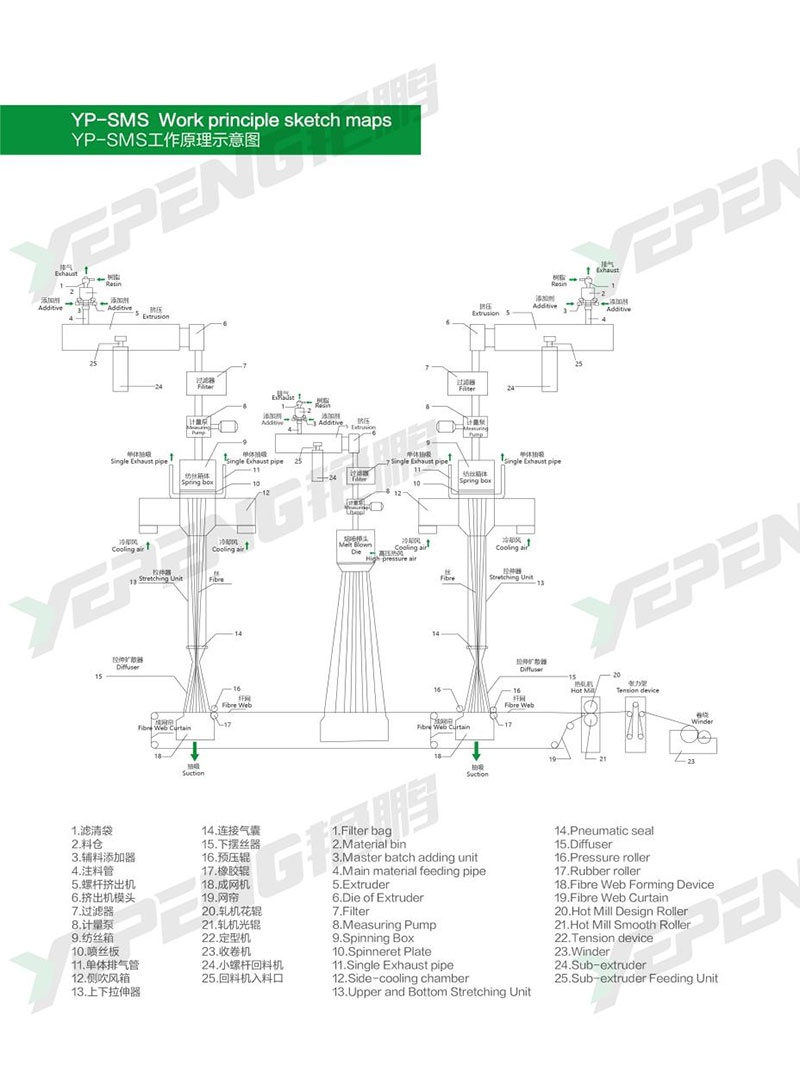
Spunmelt is a generic term describing the manufacturing of nonwoven webs directly from thermoplastic polymers. It encompasses 2 processes, spunlaid and meltblown, often run in combination.
Polymer granules are extruded into filaments through so called spinnerets. The continuous filaments are stretched and quenched before being deposited on conveyor belt to form a uniform web. The spunlaid process results into nonwovens with an increased strength compared to carding, due to the attenuation of the filaments. The downside is that the choice of raw materials is more restricted. Co-extrusion of two components leads to bico fibres, either adding more properties to the web or allowing air-through bonding. Please note that the word spunbonded is reserved for thermo bonded spunlaid.
Web bonding
This method uses the thermoplastic properties of certain synthetic fibres to form bonds under controlled heating. In some cases, the web fibre itself can be used, but more often a low melt fibre or bicomponent fibre is introduced at the web formation stage to perform the binding function later in the process.
There are several thermal bonding systems in use:
Calendering uses heat and high pressure applied through rollers to weld the fibre webs together at high speed.
Through-air thermal bonding makes bulkier products by the overall bonding of a web containing low melting fibres. This takes place in a carefully controlled hot air stream.
Drum and blanket systems apply pressure and heat to make products of average bulk.
Ultrasonic bonding is a technology in which molecules of the fibres are being ‘excited’ under a patterned roller by high frequency movement of a ‘sonotrode’ which produces internal heating and softening of the fibres.
Finishing treatment
The opportunity to combine different raw materials and different technologies accounts for the diversity of the industry and its products.
This diversity is further enhanced by a range of finishing treatments. By finishing the nonwoven can be tailored or functionalized to meet specific properties. Finishing treatments can be either mechanical (stretching, perforating, crimping etc) or chemical. With the latter one can modify the surface of the fibres and the nonwoven to change the haptics or the repellency of the nonwoven.
Nonwovens can be made conductive, flame retardant, water repellent, porous, antistatic, breathable, absorbent and much more. They can also be coated, printed, flocked, dyed or laminated to other materials.
Pagkabig
Nonwoven manufacturing ends usually with large rolls of product. Converters convert -as the word says- this roll good into a consumer product.
Sometimes converting is done in 2 steps. Before manufacturing the finished product one might want to bring the rolled good one step closer to the final product by slitting, cutting, folding, sewing or heat sealing.